When should you have a gynaecological examination?
When and how often you should have a gynaecological examination depends on whether you are experiencing any health problems and your age.
If you are not experiencing any problems in your pelvic area, no examination will be necessary other than as recommended by the Cervical Cancer Screening Programme (in Norwegian).
Gynaecological problems you can discuss with your general practitioner
Contact your general practitioner (GP) if you experience any pain in your pelvic area that persists over time, such as:
- changes in vaginal discharge and bleeding patterns
- itching or stinging in your pelvic area
- pain or discomfort during sexual intercourse
- pain or discomfort in your pelvic area or lower abdomen
- suspected sexually transmitted infection
- bleeding after menopause, if you have not had a period for more than a year
Your GP will be able to help you decide whether or not you need a gynaecological examination.
Who can perform a gynaecological examination?
Your GP
If you need to have a gynaecological examination, you can contact your GP.
Your GP will assess your symptoms and the impact they have on your daily life. Often, the assessment will also involve the doctor performing a gynaecological examination. The doctor will sometimes also take samples from your pelvic area, as well as urine or blood samples.
Your GP will also be able to provide you with guidance on contraception and can usually also insert an IUD during a gynaecological examination.
Your GP will be able to refer you to a gynaecologist if necessary. It is often important that your GP examines your pelvic area before you are referred to a gynaecologist. An examination like this will provide information that makes it easier for the gynaecologist to assess the referral, especially if you need an appointment urgently.
The gynaecologist
If necessary, your GP will refer you to a gynaecologist. A gynaecologist is a specialist in obstetrics and gynaecology who can evaluate your pelvic symptoms thoroughly. Gynaecologists can also take samples and perform ultrasound examinations.
With a referral from your GP, you can arrange an appointment with a gynaecologist at a hospital or with a gynaecologist who has a contract with the public health service. In this case, you will pay the standard user fee and it will be cheaper for you than seeing a doctor privately.
If you decide to see a private gynaecologist who does not have a contract with the public health service, you will not need a referral. In this case, you will have to pay for the appointment and the examination yourself.
Midwife
Midwives are qualified to perform simple gynaecological examinations and take cervical smears. Midwives can provide advice on contraception and help you find the birth control method that is right for you.
If you are a teenager, a midwife at a Youth Health Centre (HFU) can perform a gynaecological examination and help you choose a suitable method of birth control. You can also be tested for sexually transmitted infections there.
What does a gynaecological examination involve?
If you are booked to have a gynaecological examination, the appointment will normally last about 15 to 30 minutes. The physical examination will normally only take around 5 to 15 minutes.
Gynaecological examinations can consist of several parts:
Discussion
The appointment will normally start with the doctor asking you about your medical history, menstrual cycle, birth control, menopause, sexual health and any pelvic problems.
Please tell the doctor if you are feeling anxious or have previously found gynaecological examinations stressful, or if you have experienced sexual abuse. When the doctor knows a little more about you, it often makes the whole procedure easier for both you and the doctor.
Physical examination
To enable the doctor to perform a physical examination of your pelvic area, you will be asked to remove your clothes from the waist down (underwear and trousers/skirt). You will sometimes be given a paper towel to cover your waist with for greater privacy. This towel can also be used to remove the gel from your skin after the examination.
The examination will be performed while you are sitting in a gynaecological chair, with your legs resting in leg supports and your back raised slightly, so that you are not lying completely flat. You should try to keep your bottom and thighs still and remember to breathe. It can be a good idea to slide your bottom down the bench. The doctor will wear gloves during the examination.
The doctor will normally explain what will happen, both before and during the examination. You can tell the doctor if you do not wish to know this. You can always tell the doctor to stop whenever you want, both before and during the examination. The doctor will then take a break or stop altogether.
The examination will not normally hurt unless you have a particular condition that is already causing you pain in that area. Some people experience discomfort. This is particularly true if this is your first time having this kind of examination or if you have not had sexual intercourse before.
Examination of the vulva
The vulva is the visible, external part of the female reproductive system, consisting of the labia, clitoris, urethral opening and vaginal opening. The doctor will first examine the outer and inner labia and the vaginal opening to check for signs of sores, swelling, discolouration and rashes.
Examination of the vagina and cervix
After examining your vulva, the doctor will look inside your vagina using a speculum lubricated with gel. Speculums come in different sizes, and your doctor will decide which one is right for you.
The doctor will examine the lining of your vagina, vaginal discharge and cervix. The doctor will use a cotton swab to test for sexually transmitted infections (such as chlamydia and gonorrhea) or check the pH of your vaginal discharge. Some healthcare providers offer tests for sexually transmitted infections as a test that you can do yourself at home. The doctor will sometimes take samples and may examine the discharge under a microscope to check for bacteria and cells.
Cervical smear
A cervical smear (Pap smear) is performed while the speculum is inserted in the vagina. The doctor will insert a small brush up to the cervix to collect a cell sample. This should not hurt, but it can sometimes be a little uncomfortable. It is normal to bleed a little after this test.
Here, you can find out more about what happens during a cervical smear (in Norwegian).
Examination of the uterus and ovaries
The doctor will also often examine the size and position of your uterus and ovaries.
The doctor will wear gloves and will normally use gel. The doctor will then use their hands to feel for any abnormalities in your pelvic area, placing one hand on your abdomen and, normally, inserting two fingers into your vagina towards your cervix, uterus and ovaries. This is to detect any pain and/or changes.
It is important that you tell your doctor if you experience pain at any time during this procedure.
Your doctor may sometimes recommend that you have samples taken from your pelvic area, along with blood samples, urine samples or an ultrasound examination. Ultrasound examinations are normally vaginal (internal) and are performed by the doctor inserting an ultrasound probe into the vagina. This does not normally hurt, but some people may find it uncomfortable.
Equipment used during a gynaecological examination
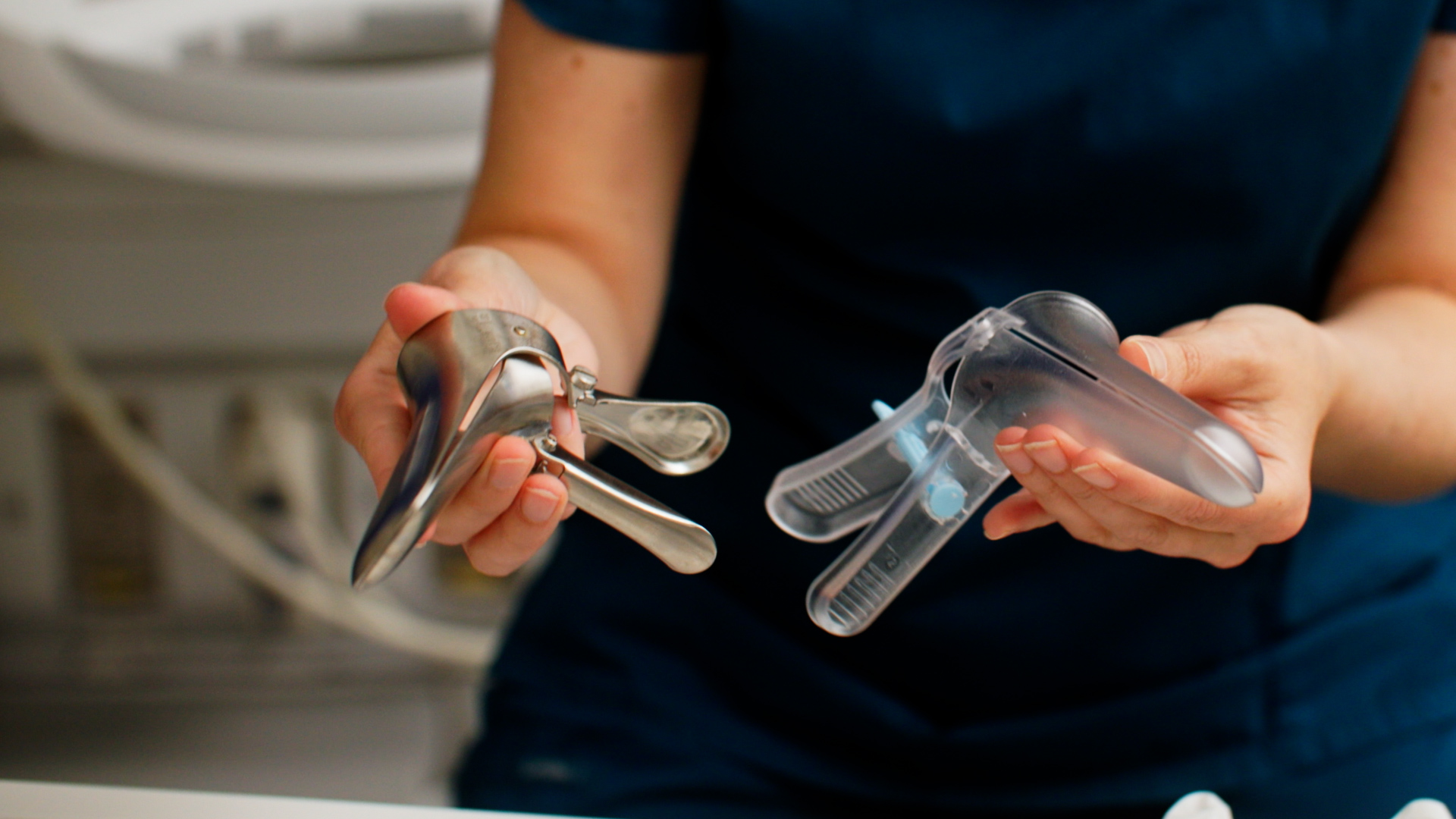
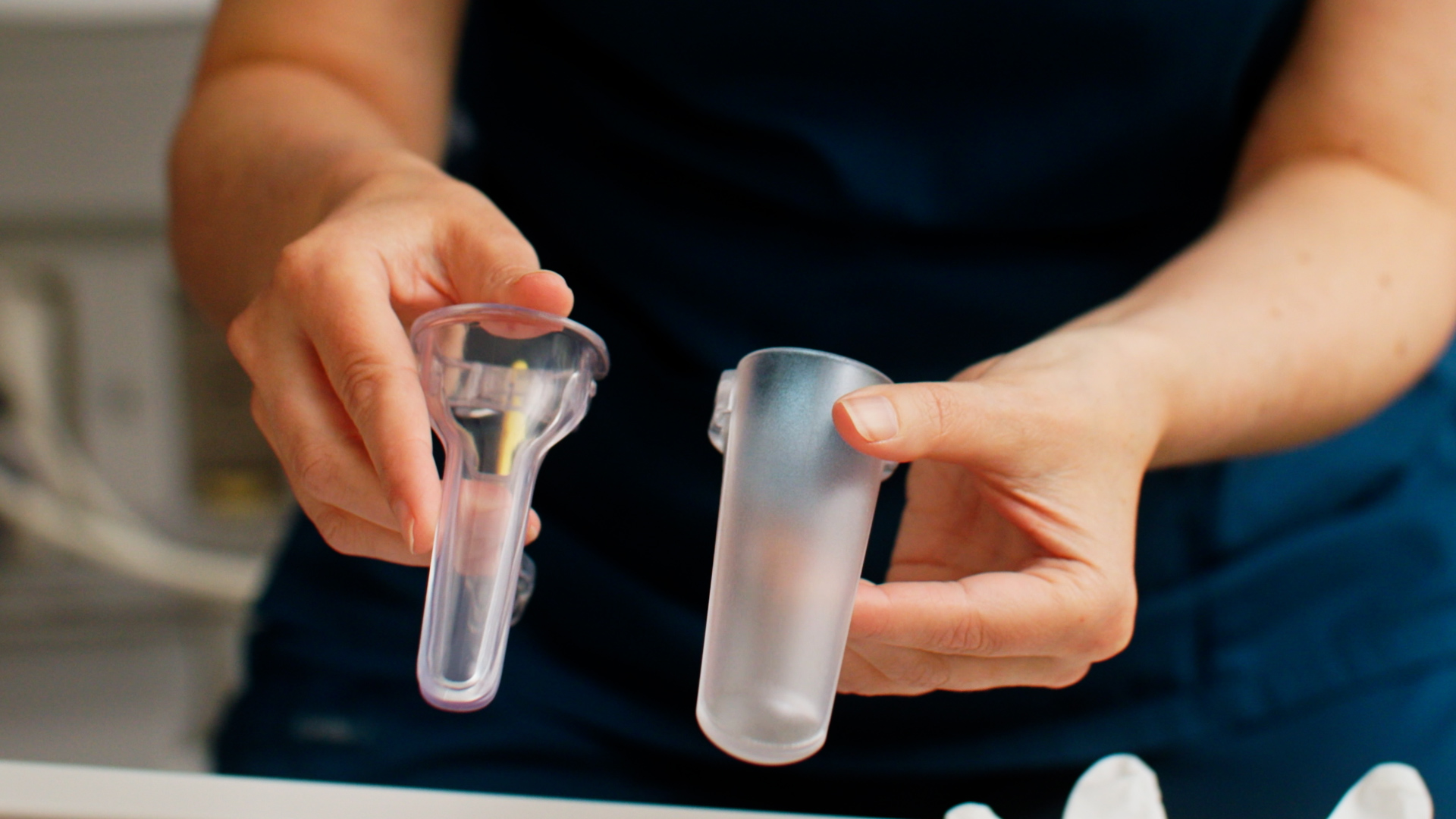
The equipment used during a gynaecological examination typically includes a speculum, examination gel, sampling equipment and ultrasound equiment.
A speculum is a medical instrument that is used to keep the vaginal opening open. The doctor uses a speculum to examine the vaginal walls, the cervix, vaginal discharge and bleeding. Speculums come in various sizes. They are normally made of metal or plastic.
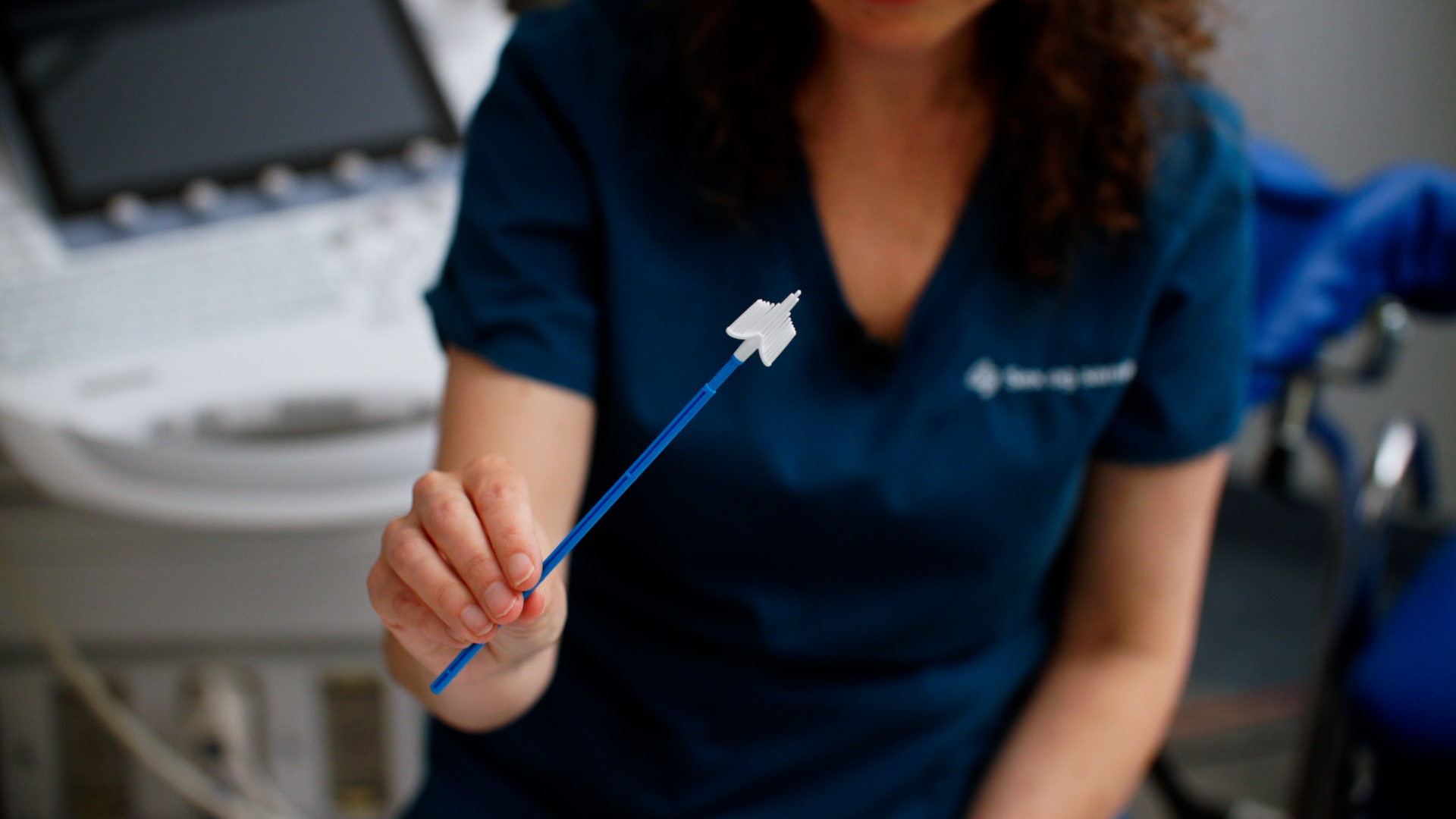
A cotton swab and/or brush is used to take samples from the genital area. A cotton swab is a small stick with cotton on the end of it. Cotton swabs are used to collect samples or to swab the mucous membranes. The brush is used to collect a cell sample from the cervix.
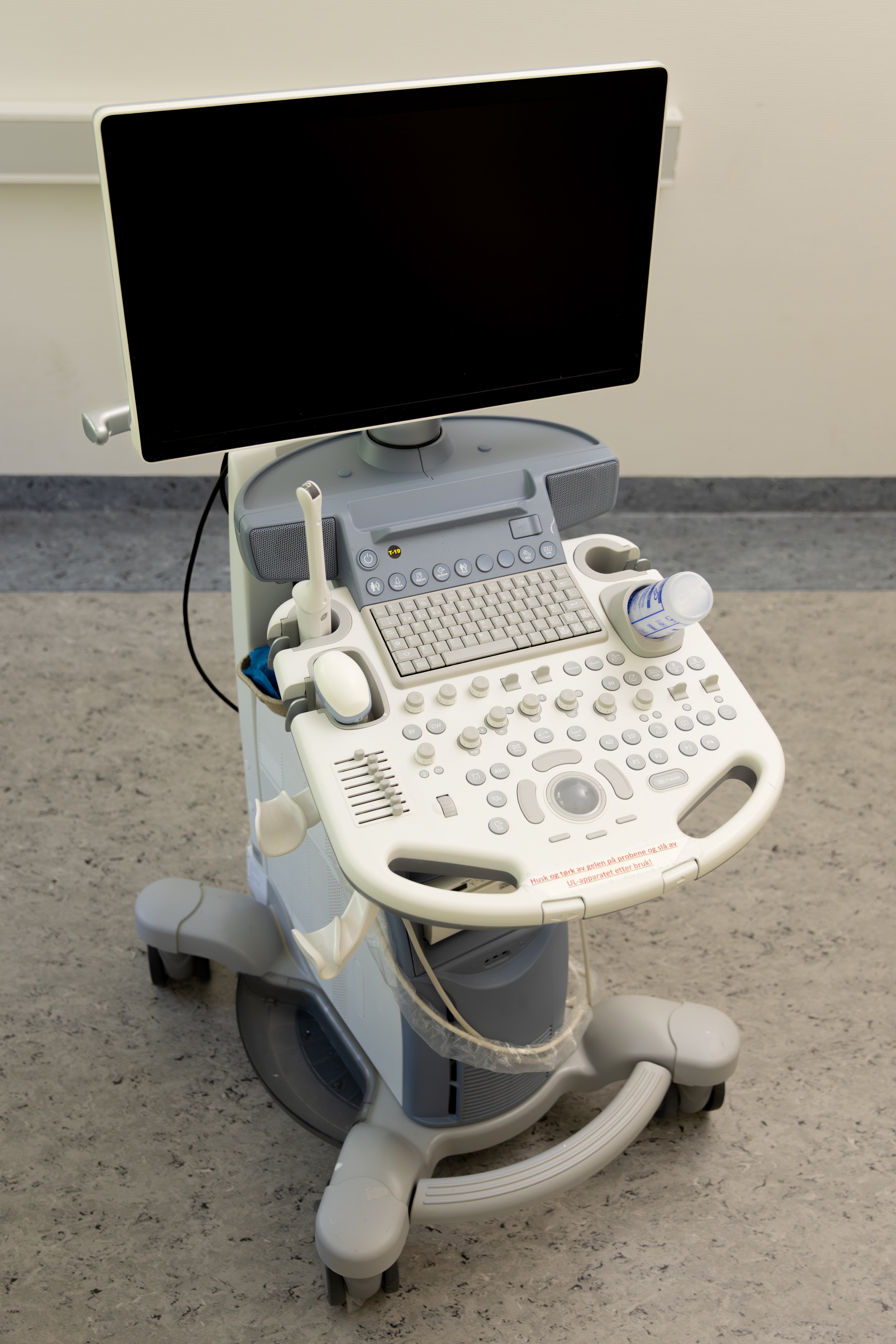
An ultrasound machine is a device that is used to see what the inside of your body looks like. Ultrasound can be used to look at the uterus, ovaries and any foetus. Ultrasound examinations are normally performed internally using an ultrasound probe, a tube-shaped instrument that is inserted into the vagina. External abdominal ultrasound examinations are used in some cases, but are most commonly used in connection with prenatal checkups.
Preparation and helpful tips before an examination
- Before your appointment, make a list of any symptoms and health problems you are experiencing and bring it with you to show the doctor.
- You do not need to remove any pubic hair before a gynaecological examination.
- Wear clothes that are easy to remove.
- Focus on keeping your bottom and thighs still, so that your pelvis is as relaxed as possible.
- Breathe in deeply with your stomach and try to focus on breathing calmly throughout the examination.
Have you ever had an unpleasant experience at the doctor's surgery?
Tell someone if you find an examination (including a gynaecological examination) different from what you were expecting or uncomfortable.
You can discuss this with another doctor or healthcare professional. Healthcare professionals will listen to what you have to say and are bound by a duty of confidentiality, so what you tell them will stay between you and them. They can provide you with information and, if necessary, advise you on what to do next.
You can also contact the Health and Social Services Ombudsman (pasientogbrukerombudet.no, in Norwegian) for advice and guidance if you are unsure about what you have experienced. The Health and Social Services Ombudsman is bound by confidentiality and you can remain anonymous if you wish.